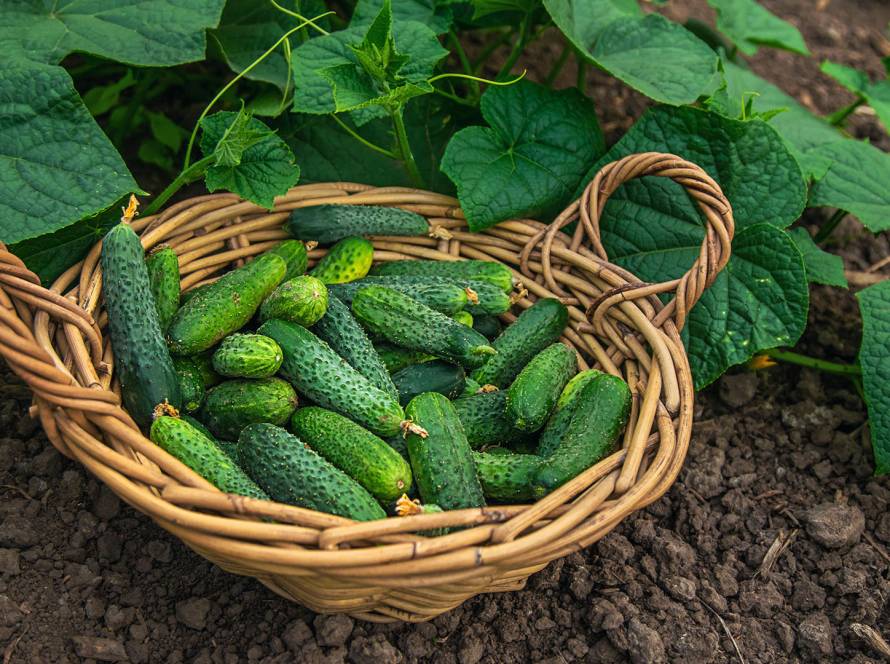
The backbone of Turkish agriculture is made up of small-scale family farms that have been cultivating the land for generations. Today, however, rising input costs, climate uncertainties, and limited water resources are putting this traditional structure to a severe test. This is exactly where AgriTech (Agricultural Technologies) steps in, offering a key to change the fate of small farms. So, how is it possible to achieve world-class productivity on just a few acres of land?
1. Precision Agriculture: Knowing Every Inch of the Soil
In traditional farming, the entire field is given the same amount of water or fertilizer. However, not every part of the soil shares the same characteristics. Precision Agriculture practices view the land not as a single uniform entity, but as a square-meter-based data map.
- Sensor Technology: IoT (Internet of Things) devices placed under the soil measure moisture, salinity, and mineral levels in real-time.
- Variable Rate Application: In light of this data, interventions are made only in the areas that need it. The result? Healthier crops with fewer resources.
2. Smart Irrigation: The Engineering Behind Every Drop
Agriculture is one of the sectors where the global water crisis is felt the most. The greatest revolution in increasing productivity on small farms is abandoning “flood irrigation” and transitioning to irrigation based on evapotranspiration (plant water consumption) data.
- Predictive Models: Soil moisture sensors, combined with data from weather stations, know in advance when the plant will get thirsty.
- Automation: Smart control units replacing manual valves can increase water savings up to 50% by irrigating during the cool of the night or at times when evaporation is at its lowest.
3. Digital Traceability and Decision Support Systems
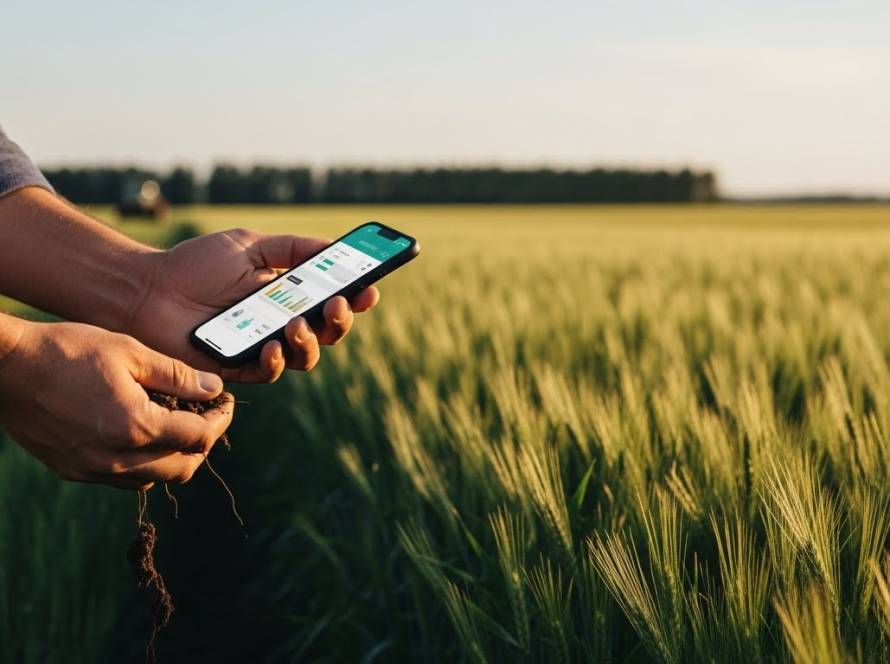
The biggest risk for a small-scale producer is noticing diseases and pests too late. AgriTech puts an “early warning system” right into the farmer’s smartphone.
- Satellite Imaging (NDVI): Thanks to indices showing plant health, developmental disorders in the field can be detected on digital maps long before they become visible to the naked eye.
- AI-Supported Prescriptions: The collected data is analyzed by artificial intelligence to provide the farmer with concrete advice, such as “You should harvest on this day” or “There is a risk of disease in this area.”
Information is the Best Fertilizer
When combined with technology, Anatolia’s fragmented land structure holds the potential to transform from a disadvantage into a high-quality, controllable “boutique production” model. The secret to high productivity on small farms lies in blending the experience of calloused hands with the precision of digital data. It is not just about plowing the soil, but reading it with data that builds the agriculture of the future.