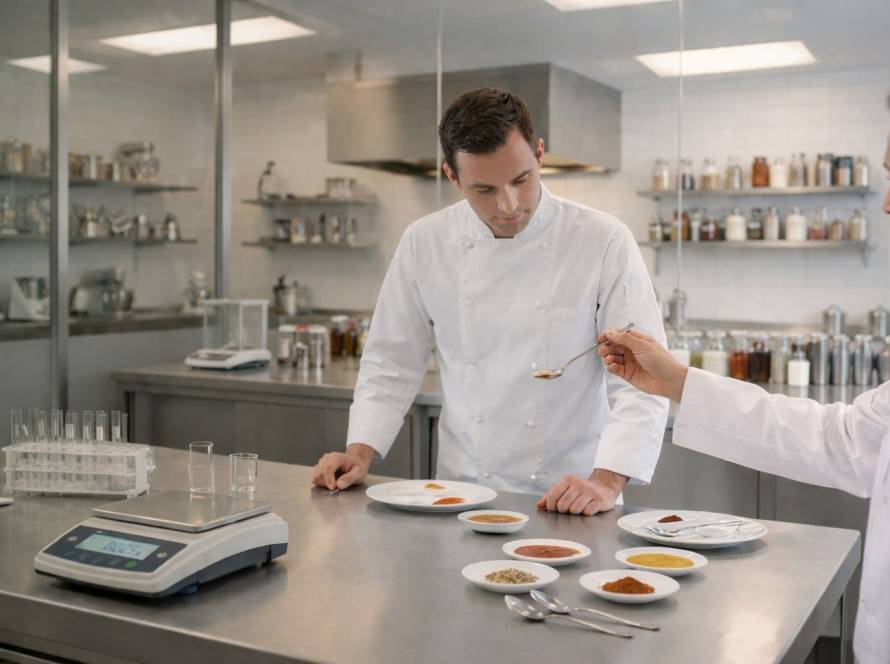
Sauces fall into three main groups based on how they’re used: tomato- and pepper-based sauces for the breakfast table, sauces used with main dishes like pasta and rice, and sauces served alongside meat, vegetables, or snacks. In Turkish cuisine, the most common base is tomato and pepper, with garlic, spices, and herbs giving each one its own character.
In this guide, we group sauce varieties by category, map out which sauce pairs with which dish, and share a few practical notes to make things easier in the kitchen.
What Is Sauce, and How Is It Categorized?
Sauce is a liquid or semi-liquid mixture prepared to add flavor, moisture, and aroma to a dish. It can accompany a dish on the side, be poured over it, or be cooked into it.
The most practical way to classify sauces is by base ingredient:
- Tomato-based sauces — The broadest group, spanning everything from breakfast sauces to pasta sauces.
- Pepper-based sauces — Made from hot or sweet peppers, ranging from a thick paste to a pourable sauce.
- Milk and cream-based sauces — Creamy pasta sauces fall into this group.
- Oil and herb-based sauces — Sauces made from herbs like basil and parsley combined with oil.
- Spice and vinegar-based sauces — Sharper sauces used in marinades and salads.
The second way to classify is by occasion: breakfast sauces, main-dish sauces, and dipping sauces served on the side. This guide follows that distinction.
Breakfast Sauce Varieties
At the Turkish breakfast table, sauce is the simplest yet most defining element next to bread. The main types are:
- Tomato-based breakfast sauce — Tomato meeting garlic and spices, spread on bread or paired with eggs. The most common form of breakfast sauce.
- Hot pepper sauce — Made from red pepper, with heat level varying by pepper type. Balanced out with cheese and eggs.
- Sweet pepper sauce — For those who avoid spice; the pepper’s natural sweetness comes through, typically paired with tomato.
- Breakfast spread (ezme) — A finely chopped, non-pourable, spreadable mix of tomato, pepper, and garlic.
- Garlic sauce — A bold, aromatic sauce where garlic dominates, used at breakfast and as a meze.
- Spiced tomato sauce (shakshuka/menemen-style) — Tomato and pepper cooked with spices, forming the base for egg-based dishes.
- Herb sauce — Light sauces built around herbs like parsley, mint, or thyme.
Pasta Sauce Varieties
Pasta sauces turn the same noodle into an entirely different dish. The main types are:
- Plain tomato sauce (Napoli-style) — Tomato, olive oil, garlic, and basil. The foundation of pasta sauces — its strength lies in simplicity.
- Spicy tomato sauce (arrabbiata-style) — The same base with chili added. Pairs well with short-cut pasta.
- Vegetable tomato sauce — Vegetables like zucchini, eggplant, and pepper cooked together with tomato sauce.
- Cream sauces — Milk or cream-based, soft and rich. Enriched with mushroom, chicken, or vegetables.
- Mushroom cream sauce — The most common variation within the cream sauce group.
- Oil-and-herb-based sauces (pesto-style) — Basil and olive oil-based sauces prepared without cooking.
- Meat tomato sauce (Bolognese-style) — A rich sauce made by slow-cooking ground meat with tomato.
Which Sauce Pairs With Which Pasta?
There’s really just one rule for pairing sauce and pasta: the sauce’s texture should match the pasta’s surface. Thin sauces coat long pasta evenly; chunky, dense sauces work better with short cuts that have space to hold onto them.
| Sauce type | Best pasta match | Why |
| Plain tomato sauce | Spaghetti, linguine | Thin sauce coats long strands evenly |
| Spicy tomato sauce | Penne, rigatoni | The short cut’s tube holds the sauce |
| Meat / chunky sauce | Tagliatelle, rigatoni | Broad surface and gaps carry the pieces |
| Cream sauce | Fettuccine, tagliatelle | Broad surface holds the cream |
| Oil-and-herb sauce | Trofie, fusilli, linguine | Twists and curls trap the oily sauce |
| Vegetable sauce | Farfalle, penne | Size matches well with vegetable pieces |
A practical tip: setting aside a ladle of pasta cooking water and adding it to the sauce noticeably improves how well the sauce clings to the pasta. The starch in the water creates a bond between sauce and noodle.
6 Practical Tips for Using Sauce
- Don’t pour the sauce over the pasta — toss the pasta into the sauce instead. A minute of tossing together in the pan gives a different result than pouring sauce on top.
- Add patience to tomato-based sauces, not a pinch of sugar. The tomato’s acidity mellows naturally with longer cooking.
- Add herbs at the very end. Basil and parsley lose their aroma with prolonged cooking.
- Don’t let cream sauces boil. High heat raises the risk of the sauce splitting; keep it on low heat.
- Take breakfast sauces out of the fridge and let them sit for a few minutes. Cold sauce doesn’t release its full aroma.
- Store an opened jar in the fridge with the lid closed, and always use a clean spoon.
Store-Bought Sauce or Homemade?
These aren’t alternatives to each other — they answer different needs.
| Homemade sauce | Store-bought sauce | |
| Time | 30–90 minutes | Ready to use |
| Ingredient control | Entirely up to you | On the label |
| Flavor consistency | Varies each time | Same in every jar |
| Seasonal dependency | Depends on tomato season | Same year-round |
| Cost | Varies by season | Predictable |
Homemade sauce has its own distinct value. What store-bought sauce offers is consistency — the same product tasting identical for twelve months in a row requires a measured production process. We explain how that process works, using pickles as the example, here: [How pickles are made in a factory]
[PRODUCT RANGE — 1]
To be filled in by the team: names and short descriptions of 2–3 products from your Berrak sauce range go here, linked to the relevant product pages. If no real product names are available yet, remove this block entirely.
Pickles and Sauce: Two Halves of the Same Table
Pickles and sauce do the same job on a Turkish table in different ways: adding brightness and character to a meal. Pickles next to sauce at breakfast, a pickle plate next to pasta at dinner — the two complete each other.
Our guide to pickle varieties: [Pickle varieties: 30 different types of pickles]
Frequently Asked Questions
What are the different sauce varieties? Sauces are grouped by base ingredient into tomato-based, pepper-based, milk and cream-based, oil and herb-based, and spice and vinegar-based. By occasion, they’re split into breakfast sauces, main-dish sauces, and dipping sauces.
What are the breakfast sauce varieties? The most common breakfast sauces are tomato-based breakfast sauce, hot and sweet pepper sauce, breakfast spread (ezme), garlic sauce, and spiced tomato sauce.
What are the pasta sauce varieties? The main types are plain tomato sauce, spicy tomato sauce, vegetable tomato sauce, cream sauces, mushroom cream sauce, oil-and-herb-based sauces, and meat tomato sauce.
Which sauce goes with which pasta? Thin sauces work best with long pasta like spaghetti; chunky, dense sauces pair better with short cuts like penne or rigatoni; cream sauces do best with broad-surface pasta like fettuccine.
Why doesn’t pasta sauce stick to the pasta? The most common reason is draining all the pasta cooking water. Adding a ladle of that water to the sauce improves how it binds, thanks to the starch it contains.
What’s the difference between breakfast sauce and pasta sauce? Breakfast sauces are typically prepared thicker and spreadable. Pasta sauces are made fluid enough to coat the pasta and are cooked for longer.
How should an opened jar of sauce be stored? In the fridge, with the lid closed. Always use a clean spoon, and follow the use-by guidance on the label.
Can tomato paste be used instead of sauce? Tomato paste isn’t a sauce — it’s a concentrated base ingredient used to make one. To use it as a sauce, it needs to be balanced out with liquid, oil, and spices.