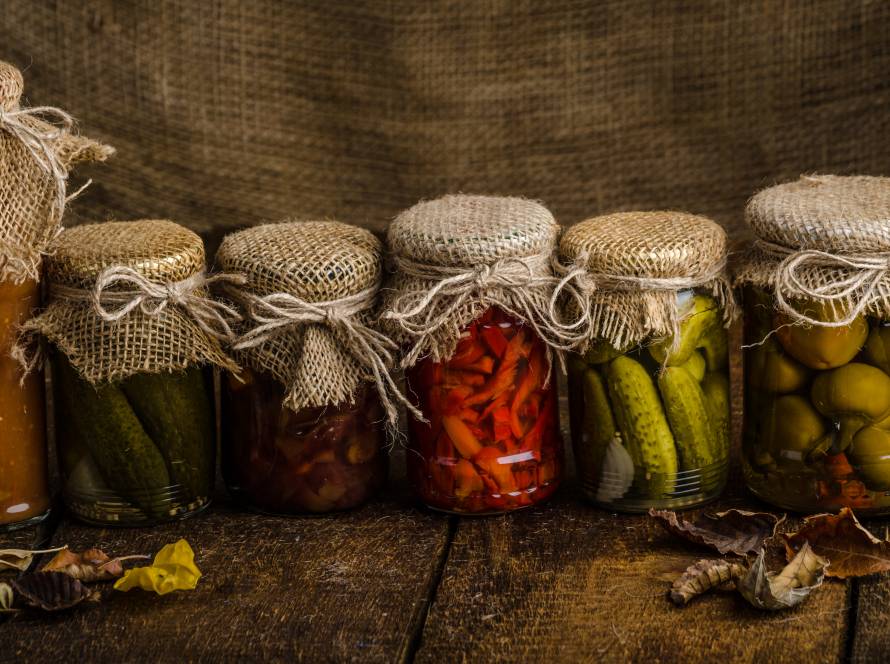
The most common pickle varieties in Turkey are cucumber, cabbage, pepper, carrot, cauliflower, turnip, and green tomato pickles. Alongside these, fruit-based pickles — unripe almond, plum, and quince — as well as mixed pickles and pickle spreads are regular fixtures on Turkish tables. Depending on preparation method, pickles fall into two main groups: vinegar-based and salt-brined (fermented).
Below, we’ve compiled more than 30 pickle varieties — from vegetable pickles to fruit pickles, mixed jars to turnip juice — along with their names, flavor profiles, and the seasons they’re traditionally prepared in.
How Many Categories of Pickles Are There?
There are two ways to categorize pickles: by raw ingredient and by preparation method. Categorizing by ingredient is the most familiar approach (cucumber pickle, pepper pickle…), but it’s the method that actually shapes flavor and texture.
Salt-brined (fermented) pickles The vegetable sits only in salted water. Acidity develops naturally over time through lactic acid bacteria in the brine. This means a longer waiting period, but a deeper, more layered flavor. This is the foundational method of traditional Anatolian pickle-making.
Vinegar-based pickles Vinegar is added to the brine, so acidity comes from an external source. The result is a sharper, clearer taste and a much shorter waiting time. This is the most common method for home pickling and store-bought products alike.
Hybrid method Many recipes in practice combine both: a short salt fermentation is started, then acidity is balanced with vinegar. Industrial production also applies pasteurization — this isn’t a pickle variety in itself, but a heat treatment that standardizes shelf life and microbiological safety.
Curious how these stages are controlled in industrial production? See: [How pickles are made in a production facility]
Vegetable Pickle Varieties
- Cucumber pickle — The most widely consumed variety. Its firm texture and balanced sourness suit any table.
- Gherkin pickle — Made from small cucumbers; bite-sized and crunchy, ideal for breakfast and snacking.
- Armenian cucumber pickle — Made from the long, fuzzy-skinned Armenian cucumber; more intensely aromatic than regular cucumber.
- White cabbage pickle — Finely shredded or left in whole leaves. Distinctly tangy, a classic side for meat dishes.
- Red cabbage pickle — Gives the brine a vivid color; visually stands out on the plate.
- Long green pepper pickle — Heat level varies by pepper; the most popular pepper pickle variety.
- Charleston pepper pickle — Meatier and closer to sweet; a good choice for those who avoid spice.
- Bell pepper pickle — Thick-fleshed, prepared in large pieces.
- Green tomato pickle — Made from unripe tomatoes; slightly bitter, with a distinctive character.
- Carrot pickle — Prepared as sticks or slices; its sweet-sour balance makes it a staple of mixed pickle jars.
- Cauliflower pickle — Broken into small florets; holds its texture for a long time.
- Broccoli pickle — Prepared similarly to cauliflower; a more recently popularized variety.
- Beet pickle — Known for its deep color; the base ingredient that gives turnip juice its color and taste.
- Turnip pickle — A winter classic with an earthy, full-bodied flavor.
- Celery pickle — Aromatic and sharp; noticeable even in small amounts.
- Eggplant pickle — Usually stuffed and tied by the stem before pickling.
- Okra pickle — Made from small okra pods; requires careful preparation due to its texture.
- Green bean pickle — Prepared in trimmed bundles.
- Garlic pickle — Pickled clove by clove or as whole heads; its sharpness mellows in the brine.
- Spring onion pickle — Light and delicate; commonly used on breakfast spreads.
- Purslane pickle — Leafy green, with a mildly tart edge.
- Mushroom pickle — Made from cultivated mushrooms; common on meze plates.
- Unripe melon pickle — Made from unripe melon; one of Anatolia’s lesser-known but deeply rooted varieties.
- Watermelon rind pickle — Made from the white rind; a traditional way to reduce food waste.
Fruit Pickle Varieties
- Unripe almond pickle — A spring pickle. Tart and crisp; prized for its short season.
- Plum pickle — Made from green plums; a pronounced sour-salty balance.
- Quince pickle — Retains its firm texture, with a hint of sweetness.
- Apple pickle — Works best with tart apple varieties.
- Pear pickle — Rarer; made with firm pear varieties.
- Fig pickle — Made from unripe green figs; a regional tradition.
Mixed and Specialty Pickles
Mixed pickle — Prepared by combining cucumber, cabbage, pepper, carrot, cauliflower, and similar vegetables in the same jar. One of the best-selling shelf varieties, since it offers multiple flavors in a single jar.
Pickle spread — Vegetables are finely chopped or mashed into a spreadable consistency. Eaten on bread or as a meze.
Grape leaf pickle — Grape leaves preserved in brine. Used year-round for making stuffed grape leaves (sarma).
Turnip juice (şalgam) — Not a solid pickle but a fermented beverage. Made with black carrot, bulgur flour, salt, and beet; an emblem of Çukurova cuisine.
Which Pickle Is Made in Which Season?
| Pickle variety | Preparation season | Approximate ready time |
| Cucumber | July – September | 2–3 weeks |
| Pepper (long green, Charleston) | August – October | 2–3 weeks |
| Green tomato | August – October | 3–4 weeks |
| White / red cabbage | October – December | 3–4 weeks |
| Cauliflower | October – January | 2–3 weeks |
| Carrot | October – February | 3–4 weeks |
| Turnip, beet | November – February | 3–4 weeks |
| Unripe almond | April – May | 3–4 weeks |
| Plum | May – June | 2–3 weeks |
Timing varies with ambient temperature, salt ratio, and vegetable size. Fermentation slows in cool environments and speeds up in warm ones — but warmth also raises the risk of texture breakdown. We cover this in detail here: [Why do pickles turn soft?]
Pickle Varieties Around the World
Pickling isn’t unique to Turkey; the idea of preserving vegetables with salt and acid emerged independently in nearly every cuisine. Germany’s fermented cabbage (sauerkraut), Korea’s spiced kimchi, Japan’s tsukemono, India’s oil-and-spice-based achar, and the Middle East’s torshi are all variations of the same core principle, adapted to different climates and palates.
We explore this diversity country by country here: [World pickle traditions]. Curious how and where pickling first began? See: [The history and origin of pickles].
Frequently Asked Questions
How many types of pickles are there? More than 30 varieties are commonly consumed. When regional variations and mixed recipes are included, the number rises much higher.
What is the most widely consumed pickle? In Turkey, cucumber pickle is the most consumed variety, followed by cabbage and pepper pickles.
What are the names of common pickle varieties? The best-known include cucumber, gherkin, Armenian cucumber, cabbage, long green pepper, Charleston pepper, bell pepper, green tomato, carrot, cauliflower, beet, turnip, celery, eggplant, garlic, purslane, and mixed pickle. Among fruits, unripe almond, plum, quince, and apple pickles stand out.
Can fruit be pickled? Yes. Unripe almond, plum, quince, apple, and fig pickles are traditional fruit pickles in Anatolian cuisine.
What’s the difference between vinegar-based and salt-brined pickles? In vinegar-based pickles, acidity comes from vinegar and the product is ready to eat quickly. In salt-brined pickles, acidity develops through natural fermentation; the process takes longer, and the flavor is more layered.
What are the pepper pickle varieties? The three most common are long green pepper, Charleston pepper, and bell pepper. Long green pepper stands out for its heat, Charleston for its near-sweet taste, and bell pepper for its thick, meaty texture.
What should I do if my pickles spoil? It depends on the symptom. See our detailed checklist here: [How to save spoiled pickles]